Child Seat Cleaning for a Safer, Fresher Ride

A child’s car seat can look clean from the front and still hold weeks of crushed snacks, spilled drinks, pet hair, and moisture in the places you cannot easily reach. Child seat cleaning is not just about making the interior look better. Done carefully, it helps refresh the space your family uses every day without compromising the seat’s materials, harness system, or safety function.
For busy families around Linden and North Jersey, the challenge is usually not knowing that the seat needs attention. It is finding the time to clean it properly between work, school drop-offs, activities, and everything else that happens in a vehicle. The right process focuses on the visible mess, the hidden buildup, and the manufacturer guidelines that should always come first.
Why Child Seat Cleaning Requires Extra Care
A car seat is not simply another upholstered surface. Its cover, foam, straps, buckles, labels, and attachment points all work together as part of a safety system. Treating it like a regular seat cushion can create problems, especially when strong cleaners, heavy saturation, or aggressive brushing are involved.
Crumbs and dust collect in seams, under the seat base, and around buckles. Milk, juice, and food residue can create lingering odors or leave sticky areas that attract even more dirt. During humid New Jersey summers, trapped moisture can make the problem worse. In winter, salt, slush, and wet boots often add another layer of interior mess around the base of the seat.
The goal is a refreshed, sanitary-feeling seat and surrounding cabin, not a process that leaves fabric soaked or interferes with critical components. That distinction matters.
Start With the Seat Manufacturer’s Instructions
Before any cleaning begins, check the seat’s instruction manual and sewn-on care labels. Manufacturers set specific rules for washing covers, spot-cleaning fabrics, and caring for harness straps and buckles. Those directions take priority over general cleaning advice.
Many removable covers can be machine-washed, but only on a particular cycle and with mild detergent. Others are meant to be hand-washed. Some covers should never go in a dryer because heat can shrink fabric, weaken elastic, or affect the fit when the cover is reinstalled.
Harness straps deserve the most caution. In many cases, manufacturers recommend cleaning them only with water or a mild soap solution, then allowing them to air-dry. Bleach, stain removers, degreasers, fabric protectors, and harsh disinfectants may damage the webbing or alter its performance. Never assume a stronger chemical means a better result.
If a label is unreadable or the manual is missing, locate the exact make and model instructions before moving forward. A few extra minutes of research is worth more than risking a seat’s safe installation or function.
A Better Process for Cleaning a Child Car Seat
The best approach is controlled and methodical. Start by removing loose items from the seat and vehicle floor area. Check beneath the seat, along the seat crease, and around the base for dropped snacks, wrappers, small toys, and debris that may be contributing to odor.
Next, vacuum carefully using a crevice tool and soft brush attachment. This step removes dry debris from seams and fabric without grinding it deeper into the material. Avoid forcing a tool into buckle openings or tight mechanical areas.
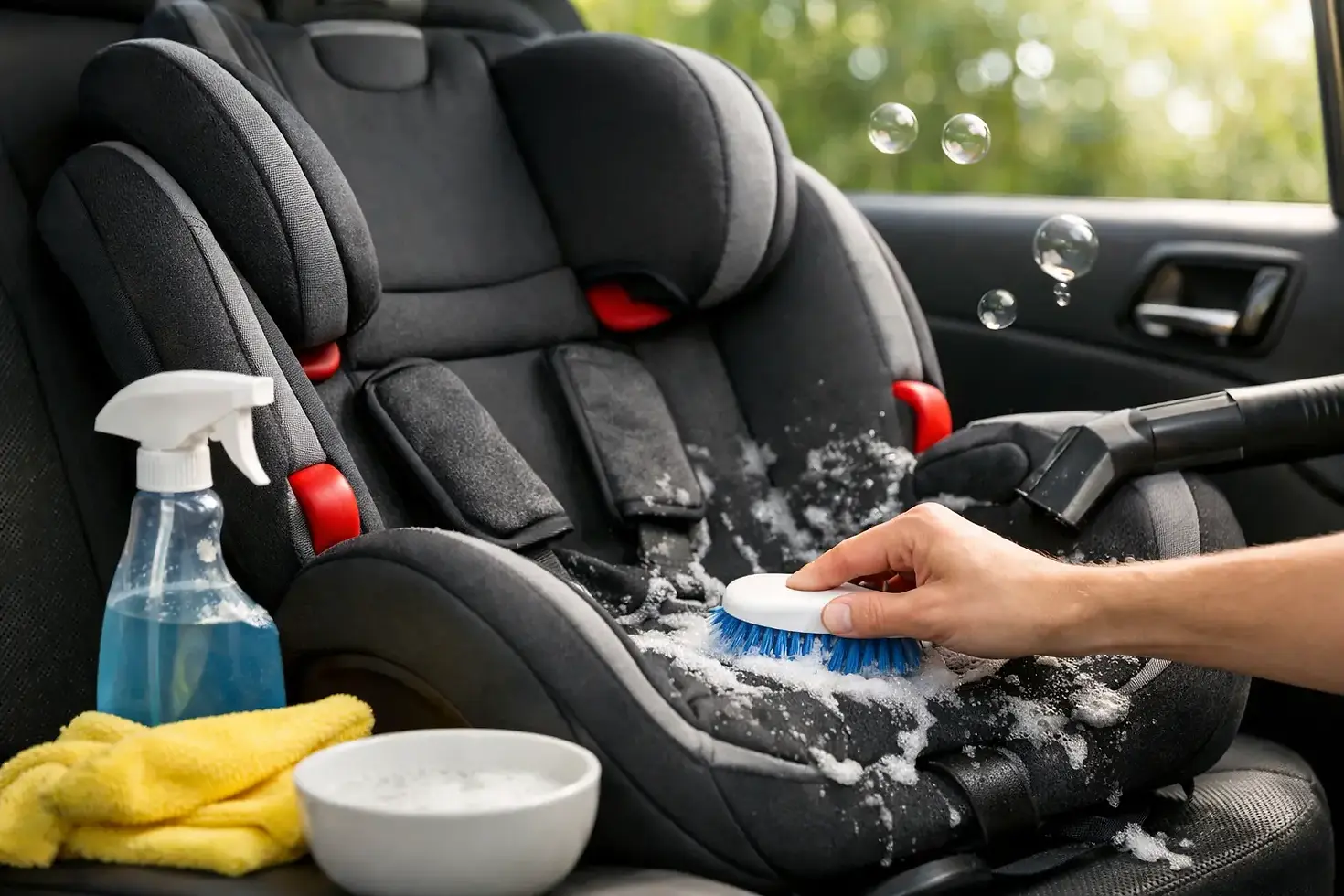
For fabric surfaces, spot-test any approved cleaner in an inconspicuous area first. Use a light application rather than saturating the padding underneath. A soft detailing brush or microfiber towel can lift surface dirt, while clean towels help absorb moisture as you work. The seat should be fully dry before it is put back into regular use.
When the cover is removable and the manufacturer allows laundering, follow the label exactly. Reinstall it carefully, making sure every opening, strap path, and attachment point sits correctly. Do not guess where a strap should run or tuck material around the harness to make it look neater. If anything is unclear, refer back to the manual.
Buckles need a separate, restrained approach. Food and sticky liquids can interfere with their movement, but soaking or lubricating them can also cause issues. Follow the manufacturer’s buckle-cleaning instructions and test the buckle after cleaning to confirm it clicks and releases as intended.
What Not to Do During Child Seat Cleaning
A few common shortcuts can create more trouble than they solve. Avoid steam cleaning a child seat unless the manufacturer specifically permits it. High heat and moisture can affect foam, adhesives, and certain fabrics, while excess moisture may remain trapped deep in the padding.
It is also wise to avoid heavy extraction on the seat itself. Hot-water extraction can be useful for many vehicle seats and carpets, but a child seat has different construction and drying requirements. If the seat becomes deeply saturated, drying time can extend and moisture can remain where you cannot see it.
Do not use household bleach, all-purpose degreasers, strong odor sprays, or perfume-heavy products on harnesses or buckles. These products can leave residue, mask the source of an odor instead of removing it, and may not be approved for the seat’s materials.
Finally, do not remove the harness or disassemble the seat beyond what the manufacturer instructs. Reassembly errors are easy to make and hard to notice. A professional detailer can clean the accessible surfaces and the surrounding vehicle interior, but safety-related disassembly should be left to the manufacturer’s documented process or a qualified child passenger safety technician.
The Areas Around the Seat Matter Too
Even a freshly cleaned child seat will not feel fully refreshed if the surrounding cabin is still holding crumbs, stains, and odors. The vehicle seat beneath it, the floor mats, door panels, center console, and rear cup holders usually carry a large share of the mess.
This is where a full interior detail can make a noticeable difference. Vacuuming beneath and around the car seat, cleaning nearby upholstery, and treating affected carpet helps remove the sources of lingering odor that a quick wipe-down misses. For families with more than one child, this can restore the entire back seat instead of making one section look clean next to everything else.
At LuxDetail, the focus is on a careful interior refresh that respects the materials inside your vehicle. For child seats, that means working thoughtfully around the seat and following the owner’s care guidance rather than using a one-size-fits-all cleaning method.
When a Professional Interior Detail Is Worth It
Routine maintenance can handle most everyday crumbs and light spills. A professional service becomes especially useful when the mess has spread into the vehicle upholstery and carpet, an odor keeps returning, or you simply do not have the time to reset the cabin properly.
It can also be a smart choice before a road trip, after a season of muddy sports practices, following a spill that reached the seat base, or when preparing a vehicle for resale. A clean, well-maintained interior is more comfortable for your family now and more appealing to a future buyer later.
The trade-off is simple: a detailer can provide the equipment, time, and process needed to restore the vehicle around the child seat, but no cosmetic service should override the child seat manufacturer’s safety instructions. If the seat has been involved in a crash, has damaged straps, a broken buckle, or stains that cannot be safely addressed under the care instructions, replacement or guidance from the manufacturer may be the better answer.
Keep the Fresh Result Longer
The easiest way to reduce deep cleaning is to prevent buildup from becoming embedded. A small trash bag, a quick weekly vacuum of the rear floor, and a check under the seat after snacks can make a surprising difference. For frequent food spills, keep a few clean microfiber towels in the vehicle so liquids can be blotted right away instead of rubbed into the fabric.
A washable seat protector may help protect the vehicle upholstery beneath a car seat, but make sure it is approved by the child seat manufacturer. Some add-ons can affect how the seat sits against the vehicle seat, so convenience should never come ahead of correct installation.
A clean child seat area gives your family more than a better-looking back seat. It creates a calmer, fresher ride and makes the daily routine feel a little more under control - one careful cleanup at a time.



Comments